
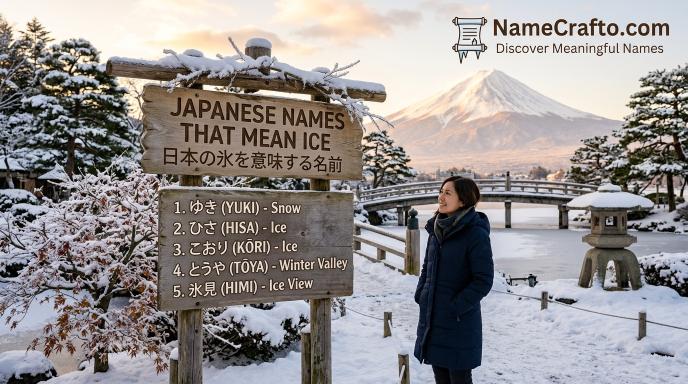
There is something quietly captivating about names connected to ice. They feel calm, elegant, mysterious, and emotionally layered all at once. In Japanese naming culture, names inspired by winter, snow, frost, and ice often symbolize purity, resilience, beauty, stillness, and inner strength.
That emotional depth is one reason why Japanese names that mean ice continue to attract modern parents, writers, anime fans, and people searching for unique meaningful names. Some feel soft and poetic, while others carry a cool, minimalist energy that feels strikingly modern.
If you are searching for Japanese names that mean ice, this guide explores beautiful options for boys, girls, and gender-neutral naming styles. Along the way, you will discover kanji meanings, pronunciation insights, cultural symbolism, naming trends, and thoughtful ideas that make these winter-inspired names feel unforgettable.
Why Ice-Inspired Japanese Names Feel So Unique
Japanese naming traditions often draw inspiration from nature and seasons. Unlike many Western names that focus primarily on religious or ancestral meaning, Japanese names frequently reflect imagery, atmosphere, and emotional symbolism.
Ice-related names are often associated with:
- purity
- clarity
- calmness
- elegance
- emotional resilience
- quiet beauty
- winter symbolism
These names can feel:
- minimal yet powerful
- poetic without sounding overly dramatic
- emotionally cool and refined
- deeply connected to nature
That balance is part of their enduring appeal.
Beautiful Japanese Girl Names That Mean Ice
Many feminine Japanese ice-inspired names feel graceful, delicate, and luminous.
| Name | Pronunciation | Meaning |
|---|---|---|
| Koori | Koh-oh-ree | Ice |
| Hyoka | Hyo-ka | Ice flower |
| Tsurara | Tsu-ra-ra | Icicle |
| Yukina | Yu-kee-na | Snow child |
| Fuyuka | Foo-yu-ka | Winter fragrance |
| Setsuna | Set-su-na | Snow moment or fleeting cold |
| Reika | Ray-ka | Cold elegance |
| Mizore | Mee-zoh-reh | Sleet |
Why These Names Feel Elegant
Names like Yukina and Reika have become increasingly admired because they combine softness with emotional depth. They feel feminine without sounding overly ornamental.
Meanwhile, Tsurara stands out for its direct winter imagery. It feels artistic, atmospheric, and memorable.
Can you imagine this name spoken softly years from now? Some names reveal their beauty through emotional atmosphere rather than popularity alone.
Strong Japanese Boy Names Connected to Ice and Winter
Masculine ice-inspired names often feel calm, disciplined, and quietly powerful.
| Name | Pronunciation | Meaning |
|---|---|---|
| Hyouma | Hyo-ma | Ice truth |
| Touya | Toh-ya | Winter valley |
| Fubuki | Foo-boo-kee | Snowstorm |
| Reito | Ray-toh | Cold frost |
| Yukio | Yu-kee-oh | Snow boy |
| Gin | Geen | Silver or icy appearance |
| Soma | Soh-ma | Frost sky association |
| Retsu | Ret-su | Sharp cold |
Modern Appeal of Winter-Themed Boy Names
Many modern parents are drawn to names like Touya and Hyouma because they sound sleek, anime-inspired, and internationally wearable.
These names often appeal to people looking for:
- unique Japanese boy names
- cool anime-style names
- names with deep meaning
- minimalist modern names
- winter-inspired baby names
Shorter names with crisp sounds feel especially modern right now.
Gender-Neutral Japanese Names Inspired by Ice
Gender-neutral names continue rising globally, and Japanese naming traditions offer many beautifully balanced options.
Yuki
One of the most beloved Japanese names associated with snow and winter. Depending on kanji, it can symbolize snow, happiness, or gentle blessing.
Rei
A minimalist name associated with coldness, purity, spirit, and elegance.
Nao
Can carry meanings connected to honesty, calmness, and winter stillness depending on kanji combinations.
Haru
Though often associated with spring, certain kanji interpretations create beautiful seasonal contrast alongside ice-themed middle names.
These names feel flexible, modern, and emotionally subtle.
The Symbolism of Ice in Japanese Culture
In Japanese aesthetics, ice is rarely viewed as harsh alone. It often represents:
- quiet strength
- emotional composure
- fleeting beauty
- seasonal transformation
- purity of spirit
- reflective calmness
Winter imagery appears frequently in:
- Japanese poetry
- anime symbolism
- traditional art
- seasonal festivals
- literature
That emotional symbolism gives Japanese names that mean ice a deeper feeling than simple seasonal references.
Ice is often connected to beauty that feels temporary yet unforgettable.
Anime and Pop Culture Influence on Ice-Themed Names
Anime and gaming culture have helped popularize many Japanese winter-inspired names internationally.
Names like:
- Touya
- Fubuki
- Rei
- Yuki
- Hyouma
often appear in characters associated with:
- calm personalities
- hidden emotional depth
- intelligence
- elegance
- supernatural abilities
- winter powers
This influence has made icy Japanese names especially appealing among younger parents and creative communities.
Still, many of these names remain culturally rooted and genuinely meaningful beyond pop culture alone.
Rare Japanese Names That Mean Ice or Frost
Some names feel especially distinctive while still maintaining authentic Japanese linguistic beauty.
| Name | Meaning |
|---|---|
| Hisame | Ice rain |
| Kogetsu | Frozen moon |
| Hyousetsu | Ice snow |
| Fuyuha | Winter leaf |
| Seika | Frost blossom |
| Rinka | Cold flower |
| Kanro | Winter dew |
These names feel poetic and cinematic without sounding artificial.
Parents searching for rare meaningful names are increasingly drawn toward this style because it balances individuality with emotional sophistication.
Soft vs Powerful Ice Names
Different ice-inspired names create very different emotional impressions.
Soft and Elegant Choices
- Yukina
- Reika
- Yuki
- Seika
- Fuyuha
These names feel:
- gentle
- graceful
- emotionally warm despite winter imagery
Bold and Dramatic Choices
- Fubuki
- Hyouma
- Tsurara
- Reito
- Kogetsu
These names feel:
- striking
- mysterious
- cinematic
- powerful
Which emotional tone feels right to you matters just as much as literal meaning.
Middle Name Ideas for Japanese Ice Names
Balancing a winter-inspired first name with a softer middle name often creates beautiful rhythm.
For Girls
| First NameMiddle Name Ideas | |
|---|---|
| Yukina | Rose, Mae, Claire |
| Reika | Elise, Jade, Noelle |
| Tsurara | Belle, June, Skye |
For Boys
| First Name | Middle Name Ideas |
|---|---|
| Touya | James, Kai, Alexander |
| Hyouma | Ren, Leo, Atlas |
| Reito | Finn, Cole, Sage |
Simple middle names often work best beside visually and phonetically rich Japanese names.
Why Winter and Ice Names Are Trending
Several naming trends are increasing interest in Japanese names that mean ice.
Nature-Inspired Naming
Parents increasingly love names connected to seasons, weather, and natural symbolism.
Minimalist Aesthetics
Short, clean names with emotional atmosphere feel modern and sophisticated.
Anime and Japanese Culture Popularity
Japanese-inspired names have become more globally recognized through entertainment, gaming, and social media.
Meaningful Symbolism
Modern families increasingly prioritize emotional depth over purely trendy sounds.
Names tied to calmness, resilience, and beauty resonate strongly right now.
Japanese Names That Mean Ice Flower
Japanese names connected with ice, snow, flowers, and winter can create a delicate yet striking feel. The exact meaning depends on the kanji used, so the names below focus on combinations involving ice, snow, frost, winter, and flowers.
- Hyoka (氷花) — Ice flower
- Touka (凍花) — Frozen flower
- Fuyuka (冬花) — Winter flower
- Setsuka (雪花) — Snow flower
- Reika (冷花) — Cold flower
- Miyuki (美雪) — Beautiful snow
- Yuki (雪) — Snow
- Koyuki (小雪) — Little snow
- Shirayuki (白雪) — White snow
- Yukika (雪花) — Snow flower
- Fuyumi (冬美) — Winter beauty
- Fuyune (冬音) — Winter sound
- Hiyuki (緋雪) — Crimson snow
- Tsurara (氷柱) — Icicle
- Mizore (霙) — Sleet
- Arare (霰) — Hail or graupel
- Fubuki (吹雪) — Blizzard
- Awayuki (淡雪) — Light or fleeting snow
- Hatsuyuki (初雪) — First snow
- Shimotsuki (霜月) — Frost month
Some of these are established Japanese names, while others are kanji combinations or words that can inspire fictional and creative naming.
Japanese Names That Mean Ice Dragon
Japanese dragon symbolism is closely associated with the kanji 竜 and 龍, which can be read as ryū or tatsu. Combining dragon-related kanji with cold, snow, winter, or water imagery can create an ice-dragon-inspired name.
- Ryū (竜) — Dragon
- Ryū (龍) — Dragon
- Tatsu (竜) — Dragon
- Tatsu (龍) — Dragon
- Ryūji (竜二) — Dragon + two
- Ryūnosuke (竜之介) — Dragon + helper
- Ryūko (龍子) — Dragon child
- Ryūki (竜輝) — Dragon + radiance
- Ryūtarō (龍太郎) — Dragon + eldest son
- Ryūto (竜斗) — Dragon + constellation measure
- Ryūkō (龍光) — Dragon + light
- Ryūjin (龍神) — Dragon god
- Tatsuki (竜貴) — Dragon + precious
- Tatsukiyo (龍清) — Dragon + pure
- Tatsumi (龍美) — Dragon + beauty
- Tatsuma (竜馬) — Dragon + horse
- Tatsuya (竜也) — Dragon + to be
- Ryuuka (龍花) — Dragon + flower
- Ryuuna (龍奈) — Dragon + feminine name element
- Miryuu (美龍) — Beautiful dragon
Several of these names have multiple possible kanji spellings, so the exact meaning can change with the characters selected.
Japanese Names That Mean Ice or Snow
Snow has a particularly strong presence in Japanese naming vocabulary, with Yuki (雪) being one of the clearest name elements associated with snow. Winter, frost, sleet, hail, and ice can also inspire names with a distinctly cold and seasonal character.
- Yuki (雪) — Snow
- Miyuki (美雪) — Beautiful snow
- Yukiko (雪子) — Snow child
- Koyuki (小雪) — Little snow
- Fuyuki (冬木) — Winter tree
- Fuyuka (冬花) — Winter flower
- Fuyumi (冬美) — Winter beauty
- Fuyune (冬音) — Winter sound
- Fuyuno (冬乃) — Of winter
- Fubuki (吹雪) — Blizzard
- Mizore (霙) — Sleet
- Tsurara (氷柱) — Icicle
- Arare (霰) — Hail or graupel
- Shimo (霜) — Frost
- Shimotsuki (霜月) — Frost month
- Hatsuyuki (初雪) — First snow
- Awayuki (淡雪) — Light or fleeting snow
- Shirayuki (白雪) — White snow
- Setsuka (雪花) — Snow flower
- Hyo (氷) — Ice
These choices include both established names and name forms based on Japanese words or kanji combinations, so the intended spelling should always be checked before using one as an official given name.
Japanese Last Names That Mean Ice
Japanese surnames rarely translate directly to the English word ice, but surnames containing kanji associated with winter, snow, or cold imagery can provide a similar meaning. Fuyuki, for example, is a documented Japanese surname commonly written 冬木, meaning winter tree.
- Fuyuki (冬木) — Winter tree
- Yukimura (雪村) — Snow village
- Yukishima (雪島) — Snow island
- Yukihara (雪原) — Snow field
- Yukiyama (雪山) — Snow mountain
- Yukikawa (雪川) — Snow river
- Yukimoto (雪本) — Snow origin or base
- Yukino (雪野) — Snow field
- Yukida (雪田) — Snow field
- Yukisawa (雪沢) — Snow marsh
- Fuyumoto (冬本) — Winter origin
- Fuyushima (冬島) — Winter island
- Fuyuhara (冬原) — Winter field
- Fuyukawa (冬川) — Winter river
- Fuyuyama (冬山) — Winter mountain
- Shimizu (清水) — Clear water
- Koori (氷) — Ice
- Shimomura (霜村) — Frost village
- Shimoyama (霜山) — Frost mountain
- Shimozawa (霜沢) — Frost marsh
For surnames, kanji combinations are especially important because the same pronunciation can have several different written forms and meanings.
Japanese Names for Ice
If you want a Japanese-inspired name that evokes ice, frozen landscapes, snow crystals, frost, or winter, these options offer a range of soft and dramatic choices. Some are conventional names, while others are words or creative kanji combinations better suited to characters and fantasy naming.
- Koori (氷) — Ice
- Hyo (氷) — Ice
- Hyoka (氷花) — Ice flower
- Hyomi (氷美) — Ice beauty
- Hyoko (氷子) — Ice child
- Tsurara (氷柱) — Icicle
- Mizore (霙) — Sleet
- Arare (霰) — Hail
- Shimo (霜) — Frost
- Shimotsuki (霜月) — Frost month
- Rei (冷) — Cold or cool
- Reika (冷花) — Cold flower
- Touka (凍花) — Frozen flower
- Touko (凍子) — Frozen child
- Fubuki (吹雪) — Blizzard
- Yuki (雪) — Snow
- Koyuki (小雪) — Little snow
- Miyuki (美雪) — Beautiful snow
- Shirayuki (白雪) — White snow
- Setsuka (雪花) — Snow flower
Japanese Names That Mean Ice Flower Girl
For a feminine name with an icy floral feeling, Japanese kanji such as 氷 for ice, 雪 for snow, and 花 for flower can be combined with feminine naming elements. The exact reading and whether a combination is used as a conventional given name should be checked individually.
- Hyoka (氷花) — Ice flower
- Setsuka (雪花) — Snow flower
- Fuyuka (冬花) — Winter flower
- Touka (凍花) — Frozen flower
- Reika (冷花) — Cold flower
- Ryuuka (龍花) — Dragon flower
- Miyuki (美雪) — Beautiful snow
- Yukika (雪花) — Snow flower
- Yukiko (雪子) — Snow child
- Koyuki (小雪) — Little snow
- Fuyumi (冬美) — Winter beauty
- Fuyuna (冬奈) — Winter + feminine name element
- Fuyune (冬音) — Winter sound
- Hiyuki (緋雪) — Crimson snow
- Shirayuki (白雪) — White snow
- Tsurara (氷柱) — Icicle
- Awayuki (淡雪) — Fleeting snow
- Hatsuyuki (初雪) — First snow
- Mizore (霙) — Sleet
- Shimomi (霜美) — Frost beauty
These names create different moods, from the delicate imagery of snow flowers to the sharper imagery of ice and frost. The kanji should be confirmed carefully because Japanese names can have multiple possible readings and meanings.
Things to Consider Before Choosing a Japanese Ice Name
Before choosing a culturally rooted name, it helps to consider:
- pronunciation ease
- cultural understanding
- spelling simplicity
- emotional connection
- long-term usability
Some names feel visually beautiful but may become difficult in everyday conversation depending on where you live.
The best choice usually balances meaning, practicality, and emotional resonance naturally.
FAQs:
What are the best Japanese names that mean ice?
Some of the most loved Japanese names that mean ice include Koori, Hyouma, Yukina, Reika, and Tsurara. These names combine winter symbolism with emotional elegance and cultural depth.
What Japanese girl names mean ice or snow?
Popular Japanese girl names connected to ice or snow include Yukina, Mizore, Tsurara, and Hyoka. These names often symbolize purity, calmness, and winter beauty.
What Japanese boy names are inspired by winter?
Japanese boy names inspired by winter include Touya, Hyouma, Fubuki, and Yukio. Many of these names feel modern, strong, and quietly sophisticated.
Is Yuki a Japanese ice name?
Yes. Yuki is strongly associated with snow and winter in Japanese culture. Depending on the kanji used, it can also symbolize happiness and gentle beauty.
Are Japanese ice names rare?
Some are rare, while others like Yuki and Rei are more familiar internationally. Rare names like Hisame and Kogetsu feel especially unique and poetic.
Do Japanese ice names have spiritual meanings?
Many do. Ice and winter symbolism in Japanese culture often represents purity, emotional resilience, inner calmness, and transformation.
Are ice-themed Japanese names gender-neutral?
Some are. Names like Yuki, Rei, and Nao work beautifully as gender-neutral Japanese names depending on kanji interpretation.
Why are winter-inspired names becoming popular?
Winter-inspired names feel emotionally calm, elegant, and nature-connected. Modern naming trends increasingly favor meaningful names with atmospheric symbolism.
Are Japanese ice names good for fictional characters?
Absolutely. Ice-inspired Japanese names are popular in anime, fantasy writing, and gaming because they sound cinematic, elegant, and emotionally layered.
What Japanese name means icicle?
Tsurara directly means icicle in Japanese. It is one of the most visually poetic and distinctive winter-inspired names.
Can Japanese ice names work internationally?
Yes. Names like Yuki, Rei, and Touya are relatively easy to pronounce globally while still maintaining authentic Japanese identity and symbolism.
What names symbolize cold beauty in Japanese culture?
Names like Reika, Hyouma, and Seika often symbolize elegance, frost, winter calmness, and refined beauty.
Conclusion:
Choosing Japanese names that mean ice is often about more than winter imagery alone. These names carry emotional stillness, quiet resilience, elegance, and natural beauty in ways that feel timeless rather than trendy.
Some feel soft and luminous like falling snow. Others feel sharp, mysterious, and cinematic. But the most memorable names usually create an emotional atmosphere the moment they are spoken.
Whether you are drawn toward graceful choices like Yukina and Reika, bold names like Fubuki and Hyouma, or minimalist favorites like Rei and Yuki, the right name often feels less like a decision and more like recognition.
Sometimes the calmest names leave the strongest impression.

I’m John Mark, the creator of NameCrafto. I share meaningful, unique, and trending names from different cultures along with their origins and meanings. My goal is to help visitors discover the perfect name in a simple and enjoyable way
4 thoughts on “81+ Cool Japanese Names That Mean Ice With Mysterious Origins”